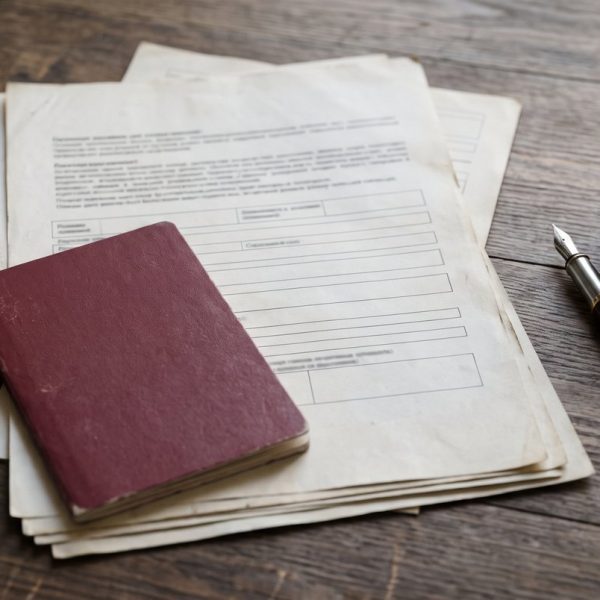
Russian to English translation looks simple from the outside. You send a document, you receive it back in English, and everyone moves on. In practice, the quality gap between a careful translation and a rushed one can decide whether an immigration file is accepted, whether a contract holds up, or whether a customer in Brooklyn understands your product. This guide covers what to know before you order, so you spend your money once and get the result you need.
Why Russian to English translation is harder than it looks
Russian and English differ in almost every structural way. Russian uses six grammatical cases, flexible word order and no articles, so a translator must decide from context whether a noun should be "a", "the" or neither. Names are another trap. The Cyrillic alphabet has to be transliterated into Latin letters, and there are several competing systems, which is why the same surname can appear as Yuriev, Yuryev or Iuriev on different papers. Consistency matters enormously here, because a mismatch between a passport spelling and a certificate spelling can slow down an official process.
The Russian language article on Wikipedia gives a helpful overview of the grammar, regional variation and writing system, and it shows why professional translators treat the language with such care. Machine tools have improved, but they still struggle with long sentences, formal registers and the layered politeness of business correspondence.
Which documents most often need translation?
Personal documents lead the list: birth, marriage and divorce certificates, passports, diplomas, school transcripts, police clearances and employment records. Businesses ask for contracts, company statutes, invoices, powers of attorney and technical manuals. Each category has its own vocabulary and its own risks. A diploma contains course names that have no exact English equivalent. A contract uses legal formulas that must be matched to the right concept in English law, not translated word for word.
Because the stakes vary so much, it helps to know what makes these texts tricky. A detailed look at the complexity of Russian document translation explains why stamps, handwritten notes, abbreviations and old Soviet-era formatting need a translator who has seen them before.
Certified Russian to English translation: when you need it
A certified translation is one that comes with a signed statement from the translator or agency confirming that the English text is complete and accurate. Many institutions ask for it, including immigration authorities, universities, courts and some employers. In the United States, the rules for filings with immigration authorities are set out in federal regulations, and the text of 8 CFR 103.2 at Cornell's Legal Information Institute states that a foreign-language document must be accompanied by a full English translation and a certification of competence. Always check the exact requirement of the office that will receive your papers, because some also want notarisation or an apostille on the original.
A certified translation does not mean the translator is "government approved" in the United States, where there is no single national register. It means a qualified professional stands behind the work. Keep that in mind when comparing quotes, and ask what the certification page will include.
How to choose a Russian translation provider
Start with the translator's native language and subject experience. For Russian into English, a native English speaker with advanced Russian often produces the most natural result, while a bilingual team can cover both directions. Ask whether a second person reviews the work, because proofreading by a different set of eyes catches mistakes the first translator cannot see. Request a sample or a short test paragraph if the project is large.
It is also worth reading how other specialists describe their own process. This article on getting Russian technical and legal documents right shows the kind of quality control a serious provider should be able to explain.
Price, turnaround and how to save money
Russian translation is usually priced per word or per page, with standard documents such as certificates often sold at a flat rate. Complex legal or technical files cost more, as do tight deadlines. You can keep costs sensible by sending clean scans instead of blurry phone photos, listing the exact spelling of names in Latin letters as they appear on your passport, and grouping related documents in a single order. Rush service is available from most agencies, but a realistic schedule almost always gives a better result and a lower bill.
Common mistakes to avoid
The most frequent problem is leaving out parts of the document. Stamps, seals, margin notes and signatures are all part of the record, and a complete translation describes them, for example "[round seal: Ministry of Education]". The second is inconsistent transliteration across several documents in the same file. The third is relying on free machine translation for anything official. It may help you understand the gist of a letter, but it cannot carry the responsibility of a certified statement.
Getting started
Before you contact a provider, gather your documents, decide who will receive the translation and note the deadline. Tell the translator the purpose, since a translation for a court is handled differently from one for a customer brochure. With those three facts in hand, a good agency can quote quickly and advise whether certification, notarisation or a legalised copy is needed.
Done well, Russian to English translation is invisible. The reader sees a clear, accurate document and acts on it, which is exactly what you want from the service you pay for.